Image
lebanon

Empowering dairy farmers in Lebanon through veterinary services and skills training

Submitted by iloadmin on
Image
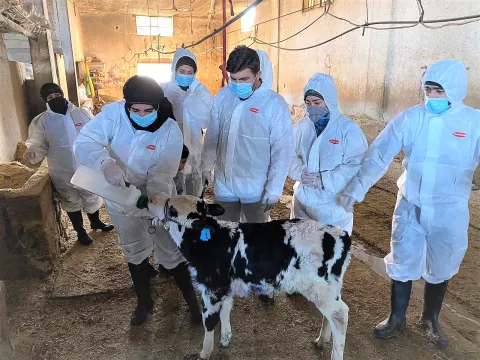
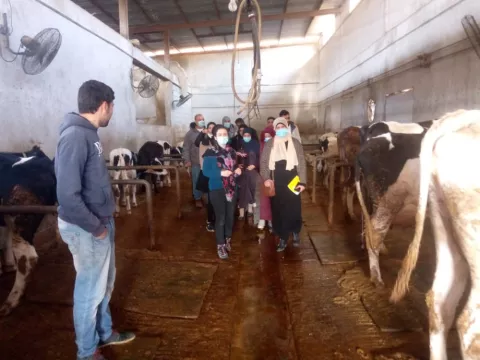
A group of vets giving a cow calf a drink in a dairy farm

The ILO and AVSI Foundation, in partnership with Lebanon’s Agriculture Ministry and with funding from the Netherlands through the PROSPECTS programme, launched a skills training initiative for local and Syrian workers on Lebanese dairy farms.

The initiative combines work-based learning with veterinary support to boost Lebanon’s dairy farming sector. In partnership with the University of Balamand, it reached 17 farms across Akkar and the Bekaa Valley, offering training and services such as vaccination and artificial insemination. Aimed at enhancing productivity, sustainability, and job creation, the programme responds to Lebanon’s ongoing economic crisis by investing in agriculture as a key driver of recovery and growth.

A deep dive into social protection for Lebanon’s agriculture workers and farmers

Submitted by iloadmin on
Image
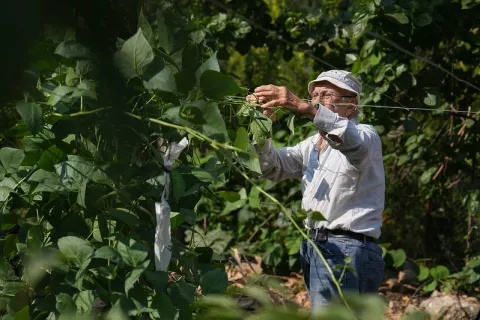
Image of an elderly person taking care of some crops in a farming field

This collection of video stories illustrates an integrated approach to extending social insurance to agriculture workers in Lebanon.

In this video, Dr Lea Bou Khater, social protection technical officer at the ILO, explains the reasons for and impact of excluding agriculture workers from the Labour Law in Lebanon, along with the challenges and barriers these workers face in accessing social protection. Workers in the agriculture sector are often excluded from social insurance schemes, leaving them vulnerable to health, economic, environmental and social risks. Essentially, one of the most exposed groups to risks is also one of the least protected. Robust social protection systems would be crucial in addressing poverty and inequality, fostering a just transition and changing the status quo.

Fatima Tarek Al-Ahmad is a Syrian agriculture worker from Hama, who has been living in Jiyeh, Lebanon, for the past ten years. She found refuge with her husband here shortly after the conflict broke out in Syria. They now have two children. They fled their home country, leaving behind a life rooted in farming.

Meet Aline Tannous, a Lebanese farmer from Hardeen in the Batroun district. Together with her husband, she cultivates a rented piece of land, growing seasonal crops. Aline explains the challenges she faces in accessing healthcare and the implications of her lack of social security coverage. She also highlights the difficulties of making ends meet as a farmer in Lebanon, including the recent effects of climate change, which are destroying her crops. These challenges compel her to work as a housekeeper in her village to earn additional income.
 

Chawki Boustani, 91, is one of the farmers the initiative has accompanied throughout a typical workday. He lost access to all his bank savings and healthcare coverage as a result of the financial crisis affecting the country. Boustani suffers from a chronic heart condition and hypertension, requiring regular medications, which he must now pay for out of his own pocket.

Following in the footsteps of his father and grandfather, Al Hazoury started working in agriculture at the age of 12. On his rented lands in North Lebanon he mainly grows seasonal crops, such as tomatoes, aubergines and courgettes. His parents and siblings work with him. With none of them benefiting from any form of social protection, they struggle to make ends meet.
 

Support for social solidarity initiatives in Lebanon

Submitted by iloadmin on
Image
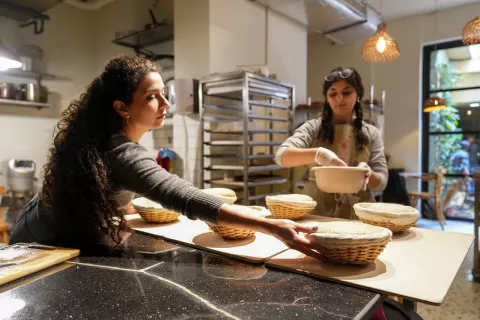
Image of two ladies making bread in a bakery

How the ILO supported SSE initiatives in Lebanon with local community leaders

Amid overlapping economic and political crises, the programme team in Lebanon engaged at the community level in Akkar, Bekaa and North Lebanon to launch social solidarity economic initiatives by rallying local community leaders to support their development and implementation. Local leaders were formed into SSE steering committees, featuring representatives from community-based organizations, cooperatives and municipal governments. The SSE steering committees underwent capacity-building to enable them to advise on SSE initiatives and navigate the challenges in the start-up phase. The initiatives themselves were developed in response to challenges identified through community-level assessments in the agriculture sector. These challenges related to the production process, limited value addition and market access. Selected initiatives were provided with training and seed funding, as well as ongoing guidance and mentorship from the steering committees. 

As an example, one SSE initiative was developed in response to the high cost of greenhouses, which left low-income farmers without space to seed crops in colder months and thus their growing season was shorter. The SSE initiative provided shared greenhouse space to refugee and host community farmers for a small fee and on the condition that a percentage of their produce be made available, free of charge, for members of the community facing food shortages. 

Because the committee members had an established leadership role in the community and were involved in the design and selection of initiatives from the outset, they invested heavily in their development. One marker of success was the signing of an MoU by one steering committee with its municipality, recognizing the committee’s role in mobilizing and guiding SSE initiatives. While the success of the initiatives themselves was challenged by the severe economic downturn in the country, they still made a difference at the community level: as well as the social good that each one supported, they created 39 jobs. 

As well as providing support to get SSE initiatives off the ground, the PROSPECTS team focused on the development of social enterprises (SEs) in sectors with job-creation potential. These sectors included agriculture, of course, but also those impacted by trade disruptions, giving domestic producers a chance to fill gaps due to the non-availability of traditionally imported goods. The team also supported enterprises that employed refugees or served them as customers, given the regulatory barriers faced by refugees in owning and registering their own enterprises in Lebanon. 

The initiative supported 17 SEs in the main refugee-hosting areas with technical training (six months of one-to-one coaching and access to networking events) and grants (of up to US$20,000) to boost their operational capacity and expand their social impact. Despite all this support, however, the financial downturn made it very difficult for them to become established. Many could not achieve financial independence without external support, while others struggled to expand their social impact.  

The experiences in Lebanon demonstrate the enthusiasm at the local level to serve a social purpose and develop businesses. Being able to sustain the initiatives in the longer term and scale up impact, however, remain challenging against the backdrop of financial crisis. Micro loans and savings products might be potential mechanisms to develop business capital, but the volatility of the situation in Lebanon requires careful weighing up of the risk factors that can influence the potential for social impact. 

Read about success stories of cooperatives formed in Lebanon:

Lebanon’s national disability allowance

Submitted by iloadmin on
Image
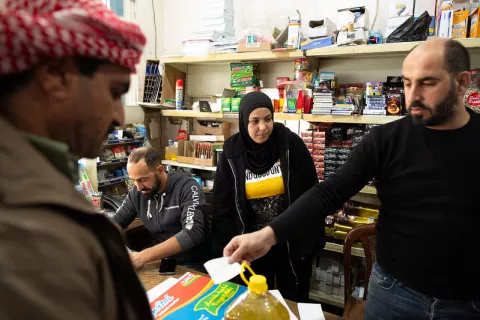
Image of a person in a shop handing a voucher to another person, with two other person in the background

The ILO and UNICEF, in collaboration with the Ministry of Social Affairs, supported the expansion of the National Disability Allowance to include refugees and people with disabilities.

PROSPECTS Lebanon contributed to an existing two-year, EU-funded social grants programme for people with disabilities, known as the National Disability Allowance (NDA). The ILO and UNICEF signed an agreement on collaborating with the Ministry of Social Affairs to provide people with disabilities (PWDs) with basic income support. This marked a shift from the “targeted social assistance” approach to a universal approach. The overall approach was inclusive across communities, not just for Lebanese PWDs, providing an entry point for the extension of the NDA to refugee PWDs.

PROSPECTS’ NDA funding was channeled into the NDA but came with the expectation that the caseload it covered would include refugees. This was significant, because the NDA was administered by the Ministry of Social Affairs and donor resources were used to support extending it to refugees. The NDA amounted to US$40/month for an initial 12-month period, along with referrals to additional services based on needs. The programme started in April 2023 and targeted people with disabilities residing in Lebanon and aged between 18 and 28 years.

PROSPECTS funding was also used to top-up NDA benefits for caseloads living in the South, at a time when conflict in Gaza started to spill across borders. While top-up NDA funding wasn't initially planned for, the outbreak of the crisis in South called for additional support and led the ILO to submit a request to the donor to repurpose funds from other planned activities. This was ultimately approved by the donor and supported by the ILO Regional Programme Unit. The NDA was able to continue to issue grants and effectively reach the target groups.

Find out more about this case study:

Find out more about the PROSPECTS programme’s wider learning on gender and disability inclusion.

Strengthening the microfinance sector in the wake of economic downturn

Submitted by iloadmin on
Image
Image of a farmer standing in the field of his farmer

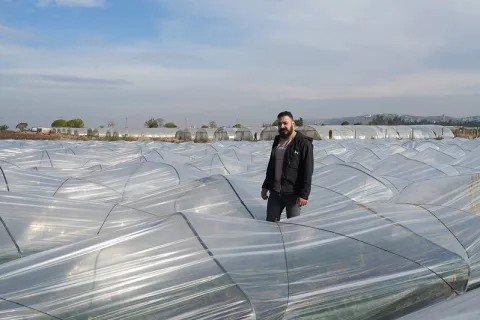
Amid Lebanon's financial crisis, PROSPECTS partnered with Al Majmoua to offer a blended finance approach for farmers and agri-food producers, demonstrating that, even in crisis, opportunities for business growth can emerge.

At the time PROSPECTS was launched, in 2019, Lebanon had undergone a deep financial and economic crisis. Soon after the programme commenced, the situation in the country worsened, with the onset of the COVID-19 pandemic, the Beirut explosion, large and unmanaged forest fires, and widespread social unrest. The financial sector was largely insolvent and in desperate need of reform, as evidenced by triple-digit inflation and the loss of 98 per cent of the currency’s value. In the early years of programming, PROSPECTS Lebanon did not work on system strengthening or engage with formal financial systems, largely because these had collapsed. In 2022, a window of opportunity opened as the market started showing some signs of stability, partly as a result of “dollarizing” the economy. Despite this, MSMEs still struggled to stay afloat and, without a stable financial service provider to serve them, they were increasingly cash-strapped. The programme took a sectoral approach and partnered with an MFI, Al Majmoua, to develop a blended finance approach for farmers and agri-food processors. This approach challenged the predominant subsidy model in the country and took the opportunity to reinvest in the microfinance sector, which had also become largely insolvent in the wake of the multiple crises. 

Al Majmoua is a pioneer in the Lebanese microfinance sector. From its founding in 1997, it focused on developing affordable financial services for micro-entrepreneurs. Even amid the multiple crises, it maintained operations and issued loan products, one of the very few institutions that was able to do so. PROSPECTS partnered with Al Majmoua, given its history and knowledge of the microfinance sector.

Following a rapid market assessment, the programme team and Al Majmoua developed a financial inclusion product for the agriculture sector. Recognizing the diversity of potential clients in the sector, three types of farmers and agriculture-related businesses were defined to better target products and technical assistance:

  • Microscale farmers and agri-food processors: primarily self-employed, relying on family members as daily workers during peak seasons; usually own or rent between two and four donums (a third of an acre) of land; and generally farm to supplement another main source of income. Loans for these farmers usually amount to less than US$1,500, owing to their limited repayment capacity and because the loans are primarily to help sustain their business. Syrian refugees largely fell into this category.
  • Small-scale farmers: bigger farms and likely to plant two seasons per year; generally hold more assets and are better established in the market; employ few fixed-term workers and take on larger numbers of workers (between five and twenty) during peak seasons. These farmers are usually served with bigger loans (US$2000–7000) and can afford to repay larger monthly instalments. Usually, the loans are used for investment in land or acquiring new technology or machinery.
  • Medium-scale farmers: well-established farmers with considerable land (50–500 donums), the majority of which is owned rather than rented; usually employ larger numbers of fixed-term workers; can easily afford to repay either monthly or seasonally. Loans are primarily used for expanding farms, creating jobs, or introducing new green practices. Loans are not the only type of finance used by this group.

The microfinance sector’s high interest rates were partially subsidized by the programme, as a measure to help farmers and processors, particularly micro and small-scale operators, enter the formal financial system. The product incorporated both financial and non-financial BDS, making use of the ILO Improve your Agri-Business (IYAB) training to help farmers and agri-food processors maintain or expand operations. 

Loans were disbursed to microbusinesses and farms largely in the form of small, regular amounts, to allow for incremental growth. The MFI also preferred this method, as it limited its losses in the event of non-repayment. Market fluctuations at the time of the intervention (2023–24) were a challenge to its already tight profit margins and rising operational expenses.

Medium-scale farmers’ financial requirements to scale up their already large operations exceeded the capacity of the MFI, particularly as the financial sector introduced liquidity constraints at the time. Small-scale farmers and businesses were therefore the primary group targeted for the product, based on their existing capital and opportunities to scale up through investment. Micro-scale farmers required a blended finance approach.

Loan clients invested more in their businesses, and more strategically, than grant recipients. This was due, in part, to their recognition of the need to repay the loans and thus qualify for future financing. Of those reached through the MFI product, 85 per cent reported profitability in their business.

In engaging with the microfinance sector and supporting business growth during a time of crisis, the PROSPECTS team in Lebanon saw how, even in a crisis situation, opportunities can still exist for some businesses. For instance, as the crisis took hold in the south of Lebanon, farmers and agriculture businesses in stable areas saw an upsurge in demand from domestic markets. While providing food for the population was a primary objective at the height of the crisis, small businesses along supply chains sourced from stable areas did experience a boost in business, demonstrating that the impact of the crisis is not even. 
Entrepreneurship training programme

Submitted by iloadmin on
Image
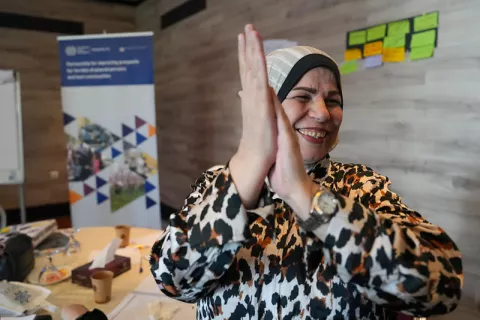
Image of a lady clapping her hands and smiling

This collection of videos shows how the ILO supported both women and men in Lebanon on various entrepreneurship training programmes.

The Start and Improve your Business (SIYB) Training of Trainers programme marks a key milestone in Lebanon’s efforts to build a sustainable entrepreneurial ecosystem. The ten-day training initiative is part of a broader strategy to certify regional master trainers and enhance business development support across the region. 

The ILO has trained more than 650 women and men, the majority of them young people, on its My First Business entrepreneurship training programme, aimed at promoting livelihoods and decent-job creation in the agriculture and agri-food sectors.

Read the Improve your Agriculture Business (IYAB) training guide for farmers and input suppliers (Arabic version). 

Find out more about the PROSPECTS programme’s wider learning on youth engagement.

Increasing employability and job opportunities in northern Lebanon

Submitted by iloadmin on
Image
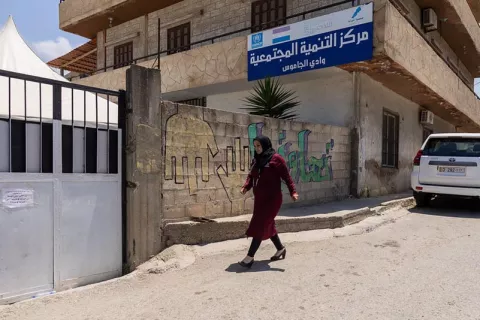
Image of a lady walking past a building on the street

This video story shows how the PROSPECTS team, in collaboration with partners, helped hundreds of Lebanese nationals and Syrian refugees  hone their skills and find jobs amid the country’s multi-level crisis.

Through a joint programme led by the ILO in collaboration with UNHCR and implemented by the Danish Refugee Council (DRC), more than 600 Lebanese nationals and Syrian refugees women and men have been trained , making the job market more accessible and inclusive. Many have since secured job offers or practical training placements with local business owners, improving their chances of long-term economic stability.

Urgent response to support refugee and host communities in Beirut

Submitted by iloadmin on
Image
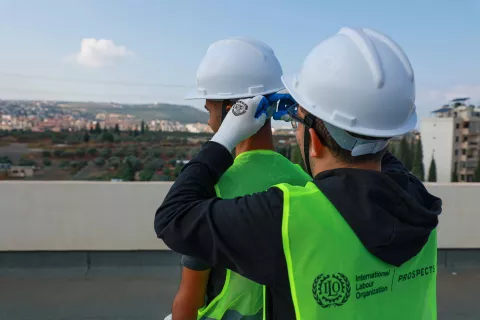
Image of one EIIP worker helping the other fasten the safety helmet

The ILO used its Employment-Intensive Investment Programmes to support the community in Beirut to mitigate the impact of the conflict, in accordance with its mandate to advance social protection and ensure decent work opportunities and economic sustainability in the longer term.

In Lebanon, EIIP was introduced as a rapid response mechanism to address the immediate aftermath of the Beirut blast in 2020. While EIIP was not initially included in the PROSPECTS work plan in the country, the team was able to repurpose funds and support an existing ILO EIIP programme in Lebanon to operationalize rubble removal and street-clearing in the days following the blast. Workers were largely refugee and host community youth, who channelled their energy into helping the community recover from the unforeseen crisis. It was particularly advantageous to be able to use the footprint of the other ILO programme, including staff who were already in place with the necessary technical expertise to carry out the EIIP work at community level. In implementation, Syrian refugee youth were particularly eager to contribute as a sign of solidarity with their host community. In this case, the repurposing of funds to support the EIIP response also demonstrated the agility of both the ILO and the donor (the Netherlands), who were both willing to expedite approval processes to serve a clear and immediate need.

In September 2024, Lebanon witnessed a sharp escalation in large-scale cross-border attacks, resulting in significant loss of life and severe damage to the economy. The recent violence has caused immense suffering and, in response, the ILO developed an emergency response plan to mitigate the impact of the conflict on the country’s residents, in accordance with its mandate to advance social protection and ensure decent work opportunities and economic sustainability in the longer term.

More about EIIP in Lebanon can be found here: https://www.eiiplebanon.com/ 

Find our more about ILO's contribution to the Lebanon Emergency Response here

Market-based skills training in dairy farming – a success story

Submitted by iloadmin on
Image
Market-based skills training in dairy farming – a success story

As Lebanon continues to reel from the effects of a multifaceted economic crisis, a competency-based training course conducted by the PROSPECTS programme gave Lebanese and Syrian trainees the key skills needed to advance their careers in Lebanon’s vital agricultural sector.

The PROSPECTS programme is helping strengthen the country’s agricultural sector through a competency-based training course in dairy livestock farming. The initiative focuses on upskilling individuals already working in agriculture and reskilling newcomers to the sector. The programme includes a ten-week course on agricultural machinery repair, followed by seven weeks of on-the-job training, equipping both Lebanese and Syrian trainees with essential technical skills to build sustainable livelihoods in the agriculture and mechanical fields.

Subscribe to Lebanon