Image
jordan-flag

Promoting social cohesion and peaceful coexistence in fragile contexts through TVET

Submitted by iloadmin on
Image
Image of a female trainee working on cutting metals with protect gloves and protect glasses on

Piloting a training guide to promote social cohesion in collaboration with TVET practitioners in various countries.

Promoting Social Cohesion and Peaceful Coexistence in Fragile Contexts through TVET is a guide that was developed to strengthen the role of TVET practitioners as active promoters of social cohesion. It provides practical guidance to trainers and managers of training centres on how to adapt delivery to mixed groups of students; embed conflict-resolution skills, cooperation and other relevant core skills into training curricula; and create conflict-sensitive, inclusive and diverse learning environments for all. The guide sets out a four-day curriculum to build the capacities of TVET trainers in facilitating core skills in social cohesion, so that they are able to include social cohesion elements in their skills development curricula.

Sample four-day curriculum:

  • Day 1: Creating the learning group and wider context
  • Day 2: Understanding social cohesion in fragile contexts working with youth and adults – the role of the trainer
  • Day 3: Exploring resources: what we bring and what else is out there to promote inclusion
  • Day 4: Assessing social cohesion and preparing for change

The guide was piloted under PROSPECTS in Kenya, Jordan, Ethiopia and Uganda, in cooperation with the Peaceful Change Initiative. A total of 73 trainers took part in a training-of-trainers session on incorporating conflict-sensitive methodologies and elements into the design and planning of vocational training programmes. In the Kenya pilot, occupational standards for technical trainers and the corresponding teacher-training curriculum were revised to take account of the role of trainers in promoting social cohesion and peaceful coexistence, following the guide. 
 

Using Estidama ++ to enhance social protection

Submitted by iloadmin on
Image
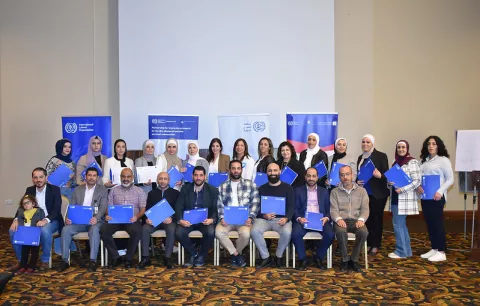
A group of workers sitting and standing in two lines holding a certificate in hand

Estidama++ extended social security coverage to vulnerable workers, including refugees, women and informal-sector workers.

Estidama++ was designed to extend social security coverage to vulnerable worker groups, including refugees, women, self-employed individuals and those in informal sectors, such as agriculture and small enterprises. Administered by Jordan’s Social Security Corporation (SSC), with technical support from the ILO and initial funding from the Kingdom of the Netherlands under the PROSPECTS Opportunity Fund, the programme has registered more than 37,500 workers as of 2025, more than half of whom are non-nationals, including refugees. It introduced contribution subsidies and tailored communication and outreach strategies to reach previously unregistered groups. Estidama++ was used by the SSC to enhance social protection, while addressing barriers to formalization. 


Estidama++ introduced targeted social security contribution subsidies to workers and employers to address affordability barriers faced by the self-employed and waged workers with low and unstable incomes. It also introduced a child benefit pilot, which paid USD28 per child per month, as a mechanism to improve attractiveness and promote women’s engagement in social security. The programme prioritized outreach for refugees in collaboration with UNHCR to overcome barriers like mistrust of national institutions and limited awareness of social security benefits. This included face-to-face outreach conducted with SSC representatives, the Ministry of Labour and UNHCR, including within the two largest refugee-hosting areas. 

A two-way chatbot was developed and piloted with SSC, allowing it to target communication to and gather information about potential and current members. In analysing data and collecting feedback throughout implementation, the programme identified areas for improvement and adjusted programme design. For example, higher attrition rates were observed among women and self-employed workers. This highlighted structural barriers that these particular groups faced, such as short-term contracts in the female-dominated education sector and irregular monthly incomes of self-employed individuals. This prompted a refinement of the subsidy design. By November 2024, 92 per cent of those who had registered for social security through the Estidama++ programme had transitioned into regular social security and continued to make contributions independently of the programme’s subsidy. 

The achievements of the Estidama++ programme and the way in which it addressed the gaps identified can serve as a blueprint for extending social protection to refugees and other groups of vulnerable workers. Estidama++ began as a targeted effort to use humanitarian funding for expanding social insurance coverage, focusing on contribution subsidies to incentivize formalization. However, expanding the coverage sustainably required a broader, systemic approach. Addressing challenges like affordability, relevance and financial sustainability demands solutions that integrate social protection with fiscal and employment policies, rather than relying solely on financial incentives.

Through Estidama++, the ILO was able to support the SSC in developing a long-term vision for reform. This systemic approach emphasizes addressing structural barriers and aligning social protection with Jordan’s economic modernization goals, ensuring equity and inclusivity for all workers, including those in non-traditional or informal employment. By using Estidama++ as an entry point, PROSPECTS has helped build a foundation for more comprehensive reforms that move beyond fragmented approaches to create a resilient and inclusive social protection system.


Read about Eyad Al Merjawi’s journey to obtain decent work and social protection in Jordan using Estidamaa++

Find out more about the PROSPECTS programme’s wider learning on gender and disability inclusion.

Success story of changing lives through decent jobs

Submitted by iloadmin on
Image
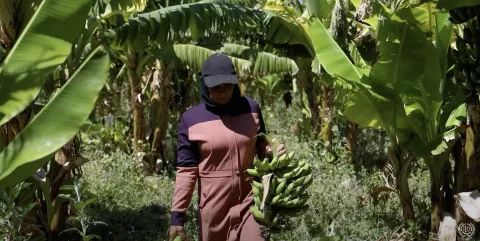
Image of a female worker in a banana farm

An ILO project in the Jordan Valley has provided vital income for two agricultural workers, Shadia Alawneh from Jordan and Sahar Ruslan from Syria. Both their lives have been marked by difficulties and worries over how to provide for their children and families, mostly because of the unstable nature of their occasional jobs. This changed when they started benefiting from the services provided by one of the six cooperatives in the country that collaborated with PROSPECTS. Through the initiative, the ILO helped the selected cooperatives in facilitating access to decent-work opportunities for Jordanian and Syrian agricultural workers.

Find out more about the PROSPECTS programme’s wider learning about gender & disability inclusion

Strengthening the cooperative movement in Jordan

Submitted by iloadmin on
Image
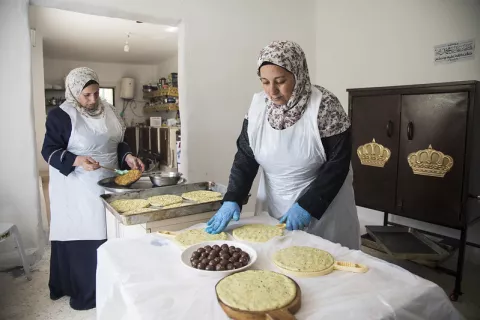
Image of two ladies making bread in a bakery

In partnership with the Jordanian Cooperatives Corporation (JCC), PROSPECTS supported the development of a national strategy and cooperative law, enhanced the capacity of the JCC and provided services to cooperatives in Jordan. 

In 2020, Jordan had nearly 1,500 registered cooperatives with more than 140,000 members, yet, for more than 20 years, the country had lacked a comprehensive cooperatives strategy. The economic and social contributions made by cooperatives were not very clear or well understood. There was also legal and administrative ambiguity, financial challenges, inefficient management structures, and a lack of awareness about shared cooperative principles and values. Although Jordan had a national body responsible for cooperatives – the Jordan Cooperatives Corporation (JCC) – this was fulfilling a largely administrative function, rather than supporting cooperative capacity and the practice of shared values. Cooperative initiatives were more common in the past, having first emerged in the 1960s in the form of rural credit societies, which provided farmers with credit, seeds and other inputs. The influence of cooperatives gradually diminished over time, as the State took on more of an ownership role. Revitalizing the cooperative sector therefore required a re-examination of the cooperative-State relationship and placing cooperative principles at the centre of cooperative operations.

Despite structural weaknesses, high unemployment and low job creation in the country, opportunities existed for cooperatives to become established and extend their services. For instance, they came to play a role in incorporating Syrian refugees into the labour market by issuing non-employer-specific work permits for the agriculture sector, in coordination with the Ministry of Labour. They also became a channel for donor funded projects to reach Syrian refugees and host communities with livelihood support, such as starting up home based businesses.

Nevertheless, the cooperative movement was still relatively weak, so the PROSPECTS team focused on strengthening the movement at large, while continuing to support cooperatives’ role as service providers and intermediaries in the refugee response. Action was taken both upstream and downstream, following an incremental approach that responded to needs and opportunities based on initial assessments of cooperatives’ capacities. PROSPECTS also built on the ILO’s history of working in Jordan and adapted the approaches of previous donor-funded projects that worked with agriculture cooperatives to serve Syrian refugees and host community members, mainly by facilitating the issuance of work permits. At the macro (policy) level, PROSPECTS supported the development of a national strategy, action plan and related review of the cooperative law. At the meso level, it enhanced the capacity of the JCC through training and support and used cooperatives’ presence on the ground to raise awareness of labour rights among refugee and host community agriculture workers. At the micro level, services were provided through cooperatives, including through the Agricultural Guidance and Employment Units (AGEUs). These operate as employment centres within high-performing agriculture cooperatives, offering career guidance and job-matching services that reflect the daily and seasonal characteristics of employment in the sector. Cooperatives were also an entry point for the provision of training in labour rights, OSH and social protection in the agriculture sector, as they had been a principal participant in consultations on the development of an agriculture workers bylaw (2020). A network of trained cooperative representatives came to act as an extended field presence for the ILO under PROSPECTS, supporting regular farm visits and training for agriculture workers.

In 2019–2020, to inform the scope of its interventions in the cooperative sector, the ILO conducted assessments of the sector, made field visits to farms in the three largest refugee-hosting governorates and engaged in social dialogue with the Ministry of Labour, Ministry of Agriculture, the JCC and farmer associations.

By mid-2020, the ILO and the JCC had signed a memorandum of understanding to develop a National Cooperative Strategy, which set out a collective vision and identified priorities for action. This was launched by the Government in 2021. The strategy (2021–2025) provided a policy tool and included an action plan focused on building the capacity of cooperatives and the JCC. One of the key outcomes of the strategy was the revision of the Cooperative Law and its alignment with the ILO Promotion of Cooperatives Recommendation, 2002 (No. 193). Key legislation changes proposed included increased representation of cooperatives on the JCC board, tax exemptions for cooperatives and allowing non-Jordanians (including refugees) to join and form cooperatives. As of late 2024, however, these proposals had not been accepted, owing to the sensitivity around taxation and non-nationals joining cooperatives as full members.

In parallel to this work upstream, the ILO used its technical expertise to develop a national training institution within the JCC. Prior to its engagement with PROSPECTS, the JCC’s main focus was on administrative procedures but with the programme’s support under the strategy and the associated action plan, it refocused its efforts on promoting cooperative principles and building the capacities of cooperative members. The ILO’s participatory approach to the development of the strategy, the JCC’s training of trainers and adaptation of COOP tools (Think.COOP, My.COOP and Start.COOP) to the local context (including translation into Arabic) facilitated a change in understanding of the role cooperatives and cooperative apex organizations play in local and national development. As a mark of progress, the ITCILO (International Training Centre of the ILO) had to translate and adapt its platform and tools to accommodate a surge in demand inspired by the JCC’s engagement in cooperative development. This demand came from cooperative institutions in both Iraq and Lebanon.

In addition to the standard COOP tools, the JCC and the ILO developed and piloted an occupational safety and health (OSH) tool and a tool on the role of cooperatives in eliminating child labour. Both responded to decent-work deficits that were evident in the agriculture sector and the role of cooperatives at a local level to help address them. The PROSPECTS team and the JCC facilitated training for Lebanese, Syrian and Iraqi cooperative institutions and their members, using COOP training tools to build a network of COOP trainers at the national level. Outside of PROSPECTS, the JCC shared its knowledge and experiences with Morocco as it revised its own strategy. Moreover, the JCC was able to mobilize resources beyond PROSPECTS, thanks to its new capacities and certified role as a training institution. The Cooperative Strategy’s action plan also prioritized key outputs, which made it easy for the JCC to engage potential funders around clearly defined areas. This included the establishment of a Cooperative Electronic Service Portal to streamline service delivery and improve data collection on cooperatives. 

At the micro level, AGEUs operated within agriculture cooperatives that had a history of facilitating agricultural work permits for Syrians. In the absence of formal and regulated employment, the sector saw the emergence of a network of informal labour brokers, called the Shaweesh. AGEUs helped formalize job placements in the sector and had dedicated staff to support Syrian refugees with the issuance of work permits, provide career counselling and refer them to employers/farmers on a daily and seasonal basis. AGEU staff conducted awareness-raising sessions with refugee and host community agriculture workers to explain the benefits of social security, work permits and other measures of formalization. Critically, they did so by visiting farms to provide in-person sessions, thereby also giving agriculture workers a point of contact. Between March 2021 and January 2022, they registered more than 3,600 agriculture workers for their services and supported close to 3,400 work placements, as well as providing labour-market information and labour-rights training. More than 2,500 work permits for Syrian workers were also facilitated through these units. In addition, the cooperatives and AGEUs were used as an entry point for raising awareness among workers of social security in the agriculture sector and for addressing the risks and instances of child labour. Cooperative members served on local child-labour committees, where they helped identify potential and actual instances of child labour in the agriculture sector and facilitate case management processes in coordination with UNICEF and local service providers.

Although the cooperative legislation introduced challenges in terms of fulfilling the principles of equality and inclusivity, the PROSPECTS team was able to work on strengthening the application of such principles downstream, while also supporting the review of laws and policies to support them. The ILO's specialization in cooperative policymaking, capacity-building and development enabled it to work at both levels and as a strong technical partner to the JCC. The parallel upstream and downstream work helped facilitate a shift in understanding of the cooperative movement at large. As one interviewee noted, stakeholders such as the Ministries of Labour and Agriculture and the JCC now share a common vision and understanding, and “speak the same language” on cooperative development. The intervention in Jordan’s cooperative sector also demonstrated the spillover benefits of horizontal integration. Cooperatives are pathways and entry points for various humanitarian and development interventions, as exemplified by the efforts to address child labour, occupational safety and health (OSH) and social security. They also add value by localizing these services and adapting them so that they are relevant for the community they serve.

Read about success stories of cooperatives formed in Jordan:

Mobile work permit units in remote locations

Submitted by iloadmin on
Image
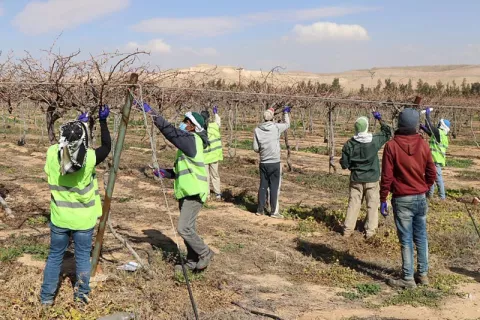
Image of a group of workers planting trees in a field

This video story shows how the PROSPECTS team and partners launched mobile work-permit units to provide essential employment services in remote areas of Jordan.

In Jordan, many agricultural and construction workers in remote areas face limited access to employment services. To address this, the ILO, in partnership with agricultural cooperatives and the General Federation of Jordanian Trade Unions,  introduced mobile work-permit units, which bring employment services directly to workers in hard-to-reach locations, improving accessibility and inclusion.

Through these mobile units, workers can apply for or renew work permits free of charge, with gender-sensitive services available to better support women. Additionally, the ILO and its partners have conducted awareness sessions targeting both workers and employers, further strengthening protections and opportunities in the agriculture and construction sectors.

Career counselling for refugee and host community students

Submitted by iloadmin on
Image
Career counselling for refugee and host community students

PROSPECTS partnered with the Ministry of Education to develop and implement a mobile application to help young people, including Syrian refugees, explore career paths.

In light of high youth unemployment in Jordan (42 per cent among those aged 15–24), PROSPECTS collaborated with the career guidance offices within Ministry of Education public schools. The programme adapted and rolled out a career guidance manual for young people, which enabled career counsellors to provide market-driven career guidance. Since Syrian refugees were enrolled in Ministry of Education public schools, they too were able to benefit from the support provided by the trained counsellors. The aim was to help students decide what professions they were interested in and might want to pursue – either through technical and vocational education or academic pathways. An accompanying mobile application featured a game for students to explore different career opportunities independently. The application, called “My Future Career Path”, allowed young players to navigate ten different games, while helping them discover their abilities and interests in different TVET career pathways. As of mid-2024, the application had been downloaded more than 1,000 times from Google Play and was later made available in the Apple Store. 

Find out more about the PROSPECTS programme’s wider learning on youth engagement

Success story of four young people in Jordan with JSC

Submitted by iloadmin on
Image
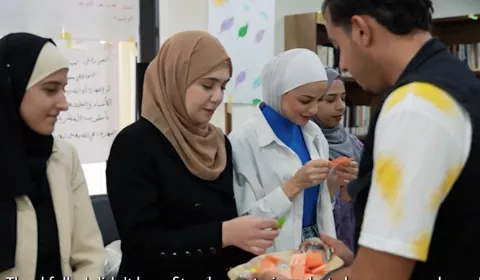
Image of four female warning headscarves picking some paper from a basket handed out from another worker

This video shows how four young people in Jordan developed new skills and found their career paths through the Job Search Club (JSC) initiative.

In this documentary, Al Harith, Issa, Abeer, and Malek share their stories, challenges, dreams, and the success they have now achieved. And these four are not alone; across Jordan, more than 1,400 Jordanian and Syrian young people have completed the intensive, career-focused training included in the JSC curriculum implemented by the ILO, UNICEF, and the Business Development Centre (BDC) in collaboration with the Ministry of Youth.

Find out more about the PROSPECTS programme’s wider learning on youth engagement

Youth engagement around JSC

Submitted by iloadmin on
Image
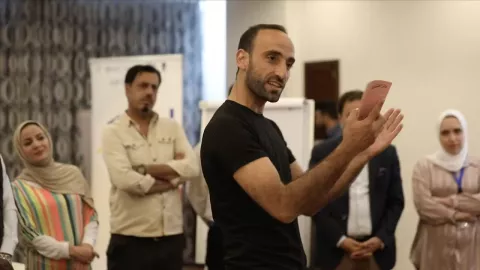
JSC_Youth engagement around JSC

The PROSPECTS Jordan team successfully adapted and implemented the Job Search Club (JSC) model in partnership with UNICEF and the Jordanian Ministry of Youth to address high youth unemployment, incorporate national policies, and include a focus on green jobs.

In 2019, the Jordanian Ministry of Youth (MOY) launched its National Youth Strategy, which called for a focus on increasing the availability and reach of services to young people through MOY centres. Following the COVID-19 pandemic, youth unemployment, that is, among those aged 15 to 24, exceeded 46 per cent; as of 2023, it remained at just over 41 per cent. This drew national attention to the situation of young people and confirmed the need for more concerted support. The MOY National Youth Strategy highlighted links to Jordan’s Vision 2025, a detailed socio-economic plan put forward by the King, entitled “Developing career guidance, employment services and changing business culture”. With these policy elements in place and against a backdrop of high youth unemployment, the PROSPECTS Jordan team adapted the JSC model from the programme in Egypt and applied it in partnership with UNICEF, using the MOY youth centres as spaces in which to convene the clubs.

Adaptation of the tool began in consultation with the PROSPECTS team in Egypt, along with the JSC master trainer in that country. The MOY in Jordan approved adaptations and provided feedback in the process. The version adapted for Jordan took into consideration labour market governance, particularly policies governing refugees’ access to specific trades and occupations. This included work-permit processes, sectors that were “closed” to foreigners and regulations to register a business. Because Egypt and Jordan shared the same language, similar cultural contexts and groups of refugees, the adaptations were relatively easy to make.

Taking the example of Egypt, the PROSPECTS Jordan team established a partnership with the MOY. It did so jointly with UNICEF, whose mandate lent itself to the activity. It established a UN-to-UN Agreement with UNICEF for the JSCs, with UNICEF transferring funds to the ILO to apply and implement the methodology. Under this collaboration, UNICEF used its partnership with the MOY to secure youth centres as spaces in which to convene the clubs. It also conducted outreach activities related to the JSC among youth groups and youth-led organizations. The ILO was responsible for adaptation, application and follow-up. Both organizations appointed country-based staff as focal points to ensure coordination and oversee day-to-day operations.

The JSC started with training for facilitators, led by the master trainer from Egypt and including staff from UNICEF, the ILO, MOY and the partner selected to implement the clubs, the Business Development Centre. The week-long training covered the role of facilitators and skills for successful facilitation, supporting job-search functions and providing job-seekers with information on job vacancies and skills requirements. Given that the clubs would bring together both refugees and members of the host community, attention was given to addressing social cohesion between these groups. 

In the pilot phase, 20 clubs were set up across the three largest refugee-hosting governorates. These included clubs inside the Zaatari and Azraq refugee camps. Each started with ten days of training, providing skills to build the employability profile of participants, followed by coaching and peer-to-peer support.

The pilot served as proof of concept, which enabled the MOY to pilot it and scale it up. By engaging the MOY directly in the adaptation and facilitator training, the Ministry’s ownership of the methodology was reinforced. The Ministry subsequently endorsed JSC as a method to deliver the aims of the National Youth Strategy. JSCs responded to real needs, namely, very high youth unemployment among both host and refugee communities in the country.

After the pilot, the JSC methodology was further adapted to focus on “green” jobs. This was partly influenced by the Ministry of Labour’s National Employment Plan 2023, the aim of which is for 10 per cent of all jobs in the Kingdom to be green by 2030. An accompanying green jobs assessment also demonstrated the current and anticipated potential for green jobs in Jordan’s agriculture, energy, manufacturing, tourism, transport, waste management and water sectors. The format of the clubs remained similar to those convened in the pilot phase but introduced the concept of green jobs and how these contribute to environmental preservation and restoration. In two cases, green JSCs were convened in universities, which provided a pool of qualified refugee and Jordanian youth in the process of pursuing green professions. In addition, a job fair was organized with private sector employers in green sectors and enterprises.

The evolution of JSC in Jordan illustrates a model that is linked to national policies and processes, while also considering genuine labour market challenges faced by young people. The methodology was relevant and beneficial to both refugees and host community members, with both groups reporting similar levels of employment directly after their participation in the clubs. 
 

Read success stories of JSC graduates and facilitators:

Find out more about the PROSPECTS programme’s wider learning on youth engagement.

Subscribe to Jordan