Extending social protection to workers in the informal economy

Submitted by iloadmin on
Image
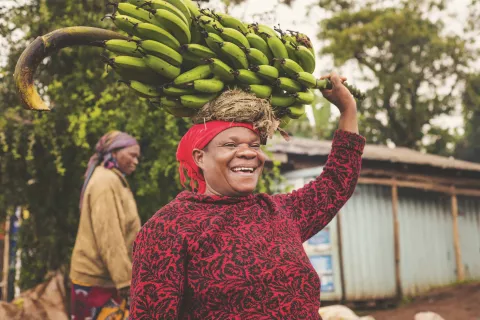
Image of a female person in the street carrying a bunch of banana on her head and smiling with another person at the background

The PROSPECTS team worked closely with the National Social Security Fund (NSSF) to adapt the Haba Haba voluntary savings scheme to meet the needs of refugees.

Prompted by the COVID-19 pandemic, the Government of Kenya developed a keen interest in extending social protection to workers in the informal economy. PROSPECTS, together with the UN Food and Agriculture Organization, conducted a study of social protection coverage and gaps for workers in the informal economy, including refugees. Based on the outcomes, the programme team supported the extension of the national strategy for social protection to the informal economy. The refugee aspect was mainstreamed in the strategy, to include them from the outset. This was done through various stakeholder consensus-building workshops and events. In November 2023, the strategy was launched and implemented in two counties.

In parallel, the Kenyan National Health Insurance Fund (NHIF) approached the ILO to develop and cost a universal maternity benefit for the country. PROSPECTS joined forces with an EU-financed social protection and public financial management project to design and cost a maternity income benefit for women in the informal economy. Female refugees enrolled in the NHIF would also receive a new maternity cash benefit. Several workshops were conducted with key stakeholders to agree on the design.

As refugees in Kenya were working almost exclusively in the informal economy and had limited access to banking or other savings mechanisms for old age, the programme team worked closely with the National Social Security Fund (NSSF) to adapt the Haba Haba voluntary savings scheme to the needs of refugees. The decision to do so stemmed from a feasibility study conducted by the ILO, which identified the main barriers to refugee participation in the scheme and a considerable stakeholder interest to develop a joint national roadmap for including refugees in the scheme. One of the key issues was lack of proper documentation, which prevented many refugees from enrolling in the scheme. In response, the registration requirements were modified and continuous dialogue between the NSSF and the Department of Refugee Services facilitated effective coordination. In addition to simplifying the registration processes, the adaptations included mobile-based platforms so that refugees did not need to rely on banking infrastructure, flexible contribution structures and the option to make early withdrawals in case of repatriation. Information materials in several languages were also provided and community outreach efforts were made. The outreach activities by partners were accompanied by financial literacy programmes targeting refugees. Bringing all stakeholders together helped overcome some entrenched barriers – for example, the Department of Refugee Services accelerated the issuance of refugee IDs in partnership with the National Registration Bureau, helping refugees obtain the necessary documentation for inclusion in the scheme. This adaptation of a social security scheme is an important development in moving away from humanitarianism and towards a more sustainable development approach to refugee support in Kenya.

Find out more about the Haba Haba savings scheme here.

Find out more about the PROSPECTS programme’s wider learning on gender and disability inclusion.

Egypt’s universal health insurance

Submitted by iloadmin on
Image
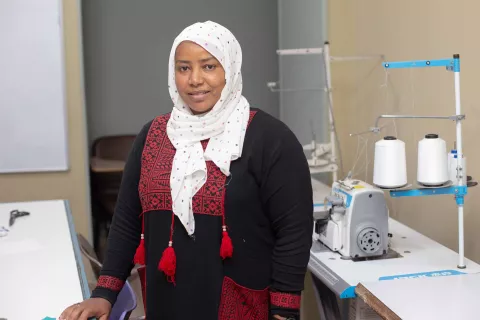
Image of a female worker standing in front of a sewing machine

The ILO and UNHCR jointly assessed the feasibility of including refugees and asylum-seekers in Egypt’s Universal Health Insurance scheme.

In 2018, the Universal Health Insurance (UHI) law was enacted as part of the Government of Egypt’s commitment to progress towards universal health coverage. The new scheme was implemented in phases between 2019 and 2023. Refugees’ access to healthcare was regulated through a Memorandum of Understanding (MoU) signed between the Ministry of Health and Population and UNHCR. This MoU granted refugees and asylum-seekers from all nationalities access on a par with nationals to health services financed through the Ministry of Health and Population. 

The ILO and UNHCR jointly assessed the feasibility of including refugees and asylum-seekers in Egypt’s UHI scheme. The feasibility study evaluated the provision of healthcare services to the refugee and asylum-seeker populations, their contributory capacity, the costs associated with their inclusion, as well as practical steps to include them. Among other things, the study:

found that UHI established a legal framework to extend social health protection to the entire population, offering a pathway to including refugees in the UHI scheme on a par with nationals;
proposed cost policy options for refugee inclusion based on socio-economic status. Various scenarios were considered to assess which refugees could pay contributions;
highlighted the need for greater focus on the informal economy, in which a significant share of refugee households is likely to work. In particular, the mechanisms to identify, enrol and collect contributions from workers in the informal economy need to be strengthened and the vulnerability assessment currently in use needs to be reviewed.

The feasibility study led to a series of engagements by the government, development partners and donors to build consensus on the findings and on the way forward. The Government of Egypt agreed to pilot the inclusion of refugees and asylum-seekers in two governorates and to establish a Technical Working Group to discuss the practical and operational steps to including refugees, as well as build in evaluation mechanisms to learn from the forthcoming pilots in the two governorates (chosen because they are home to the largest numbers of refugees).  

Find out more about this case study:

Success story of changing lives through decent jobs

Submitted by iloadmin on
Image
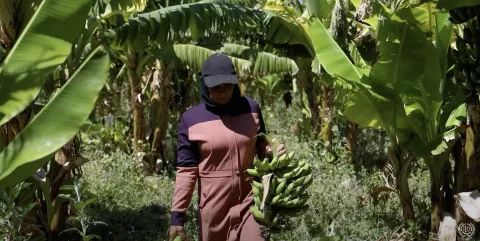
Image of a female worker in a banana farm

An ILO project in the Jordan Valley has provided vital income for two agricultural workers, Shadia Alawneh from Jordan and Sahar Ruslan from Syria. Both their lives have been marked by difficulties and worries over how to provide for their children and families, mostly because of the unstable nature of their occasional jobs. This changed when they started benefiting from the services provided by one of the six cooperatives in the country that collaborated with PROSPECTS. Through the initiative, the ILO helped the selected cooperatives in facilitating access to decent-work opportunities for Jordanian and Syrian agricultural workers.

Find out more about the PROSPECTS programme’s wider learning about gender & disability inclusion

Strengthening the cooperative movement in Jordan

Submitted by iloadmin on
Image
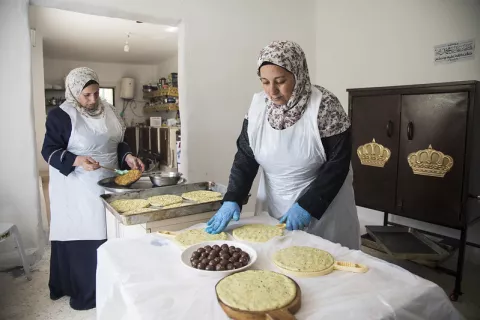
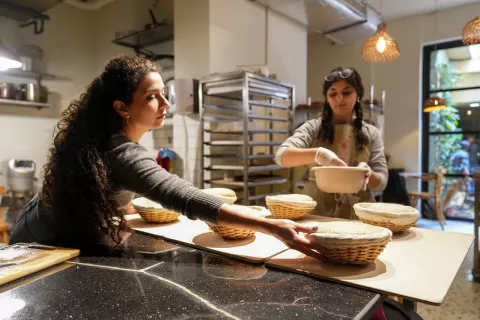
Image of two ladies making bread in a bakery

In partnership with the Jordanian Cooperatives Corporation (JCC), PROSPECTS supported the development of a national strategy and cooperative law, enhanced the capacity of the JCC and provided services to cooperatives in Jordan. 

In 2020, Jordan had nearly 1,500 registered cooperatives with more than 140,000 members, yet, for more than 20 years, the country had lacked a comprehensive cooperatives strategy. The economic and social contributions made by cooperatives were not very clear or well understood. There was also legal and administrative ambiguity, financial challenges, inefficient management structures, and a lack of awareness about shared cooperative principles and values. Although Jordan had a national body responsible for cooperatives – the Jordan Cooperatives Corporation (JCC) – this was fulfilling a largely administrative function, rather than supporting cooperative capacity and the practice of shared values. Cooperative initiatives were more common in the past, having first emerged in the 1960s in the form of rural credit societies, which provided farmers with credit, seeds and other inputs. The influence of cooperatives gradually diminished over time, as the State took on more of an ownership role. Revitalizing the cooperative sector therefore required a re-examination of the cooperative-State relationship and placing cooperative principles at the centre of cooperative operations.

Despite structural weaknesses, high unemployment and low job creation in the country, opportunities existed for cooperatives to become established and extend their services. For instance, they came to play a role in incorporating Syrian refugees into the labour market by issuing non-employer-specific work permits for the agriculture sector, in coordination with the Ministry of Labour. They also became a channel for donor funded projects to reach Syrian refugees and host communities with livelihood support, such as starting up home based businesses.

Nevertheless, the cooperative movement was still relatively weak, so the PROSPECTS team focused on strengthening the movement at large, while continuing to support cooperatives’ role as service providers and intermediaries in the refugee response. Action was taken both upstream and downstream, following an incremental approach that responded to needs and opportunities based on initial assessments of cooperatives’ capacities. PROSPECTS also built on the ILO’s history of working in Jordan and adapted the approaches of previous donor-funded projects that worked with agriculture cooperatives to serve Syrian refugees and host community members, mainly by facilitating the issuance of work permits. At the macro (policy) level, PROSPECTS supported the development of a national strategy, action plan and related review of the cooperative law. At the meso level, it enhanced the capacity of the JCC through training and support and used cooperatives’ presence on the ground to raise awareness of labour rights among refugee and host community agriculture workers. At the micro level, services were provided through cooperatives, including through the Agricultural Guidance and Employment Units (AGEUs). These operate as employment centres within high-performing agriculture cooperatives, offering career guidance and job-matching services that reflect the daily and seasonal characteristics of employment in the sector. Cooperatives were also an entry point for the provision of training in labour rights, OSH and social protection in the agriculture sector, as they had been a principal participant in consultations on the development of an agriculture workers bylaw (2020). A network of trained cooperative representatives came to act as an extended field presence for the ILO under PROSPECTS, supporting regular farm visits and training for agriculture workers.

In 2019–2020, to inform the scope of its interventions in the cooperative sector, the ILO conducted assessments of the sector, made field visits to farms in the three largest refugee-hosting governorates and engaged in social dialogue with the Ministry of Labour, Ministry of Agriculture, the JCC and farmer associations.

By mid-2020, the ILO and the JCC had signed a memorandum of understanding to develop a National Cooperative Strategy, which set out a collective vision and identified priorities for action. This was launched by the Government in 2021. The strategy (2021–2025) provided a policy tool and included an action plan focused on building the capacity of cooperatives and the JCC. One of the key outcomes of the strategy was the revision of the Cooperative Law and its alignment with the ILO Promotion of Cooperatives Recommendation, 2002 (No. 193). Key legislation changes proposed included increased representation of cooperatives on the JCC board, tax exemptions for cooperatives and allowing non-Jordanians (including refugees) to join and form cooperatives. As of late 2024, however, these proposals had not been accepted, owing to the sensitivity around taxation and non-nationals joining cooperatives as full members.

In parallel to this work upstream, the ILO used its technical expertise to develop a national training institution within the JCC. Prior to its engagement with PROSPECTS, the JCC’s main focus was on administrative procedures but with the programme’s support under the strategy and the associated action plan, it refocused its efforts on promoting cooperative principles and building the capacities of cooperative members. The ILO’s participatory approach to the development of the strategy, the JCC’s training of trainers and adaptation of COOP tools (Think.COOP, My.COOP and Start.COOP) to the local context (including translation into Arabic) facilitated a change in understanding of the role cooperatives and cooperative apex organizations play in local and national development. As a mark of progress, the ITCILO (International Training Centre of the ILO) had to translate and adapt its platform and tools to accommodate a surge in demand inspired by the JCC’s engagement in cooperative development. This demand came from cooperative institutions in both Iraq and Lebanon.

In addition to the standard COOP tools, the JCC and the ILO developed and piloted an occupational safety and health (OSH) tool and a tool on the role of cooperatives in eliminating child labour. Both responded to decent-work deficits that were evident in the agriculture sector and the role of cooperatives at a local level to help address them. The PROSPECTS team and the JCC facilitated training for Lebanese, Syrian and Iraqi cooperative institutions and their members, using COOP training tools to build a network of COOP trainers at the national level. Outside of PROSPECTS, the JCC shared its knowledge and experiences with Morocco as it revised its own strategy. Moreover, the JCC was able to mobilize resources beyond PROSPECTS, thanks to its new capacities and certified role as a training institution. The Cooperative Strategy’s action plan also prioritized key outputs, which made it easy for the JCC to engage potential funders around clearly defined areas. This included the establishment of a Cooperative Electronic Service Portal to streamline service delivery and improve data collection on cooperatives. 

At the micro level, AGEUs operated within agriculture cooperatives that had a history of facilitating agricultural work permits for Syrians. In the absence of formal and regulated employment, the sector saw the emergence of a network of informal labour brokers, called the Shaweesh. AGEUs helped formalize job placements in the sector and had dedicated staff to support Syrian refugees with the issuance of work permits, provide career counselling and refer them to employers/farmers on a daily and seasonal basis. AGEU staff conducted awareness-raising sessions with refugee and host community agriculture workers to explain the benefits of social security, work permits and other measures of formalization. Critically, they did so by visiting farms to provide in-person sessions, thereby also giving agriculture workers a point of contact. Between March 2021 and January 2022, they registered more than 3,600 agriculture workers for their services and supported close to 3,400 work placements, as well as providing labour-market information and labour-rights training. More than 2,500 work permits for Syrian workers were also facilitated through these units. In addition, the cooperatives and AGEUs were used as an entry point for raising awareness among workers of social security in the agriculture sector and for addressing the risks and instances of child labour. Cooperative members served on local child-labour committees, where they helped identify potential and actual instances of child labour in the agriculture sector and facilitate case management processes in coordination with UNICEF and local service providers.

Although the cooperative legislation introduced challenges in terms of fulfilling the principles of equality and inclusivity, the PROSPECTS team was able to work on strengthening the application of such principles downstream, while also supporting the review of laws and policies to support them. The ILO's specialization in cooperative policymaking, capacity-building and development enabled it to work at both levels and as a strong technical partner to the JCC. The parallel upstream and downstream work helped facilitate a shift in understanding of the cooperative movement at large. As one interviewee noted, stakeholders such as the Ministries of Labour and Agriculture and the JCC now share a common vision and understanding, and “speak the same language” on cooperative development. The intervention in Jordan’s cooperative sector also demonstrated the spillover benefits of horizontal integration. Cooperatives are pathways and entry points for various humanitarian and development interventions, as exemplified by the efforts to address child labour, occupational safety and health (OSH) and social security. They also add value by localizing these services and adapting them so that they are relevant for the community they serve.

Read about success stories of cooperatives formed in Jordan:

A deep dive into social protection for Lebanon’s agriculture workers and farmers

Submitted by iloadmin on
Image
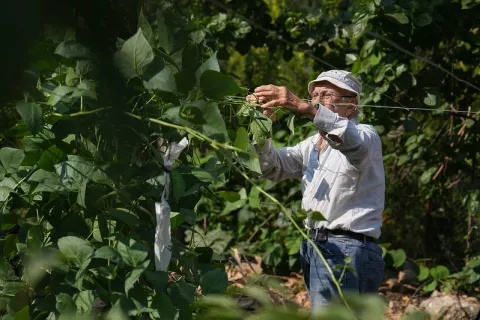
Image of an elderly person taking care of some crops in a farming field

This collection of video stories illustrates an integrated approach to extending social insurance to agriculture workers in Lebanon.

In this video, Dr Lea Bou Khater, social protection technical officer at the ILO, explains the reasons for and impact of excluding agriculture workers from the Labour Law in Lebanon, along with the challenges and barriers these workers face in accessing social protection. Workers in the agriculture sector are often excluded from social insurance schemes, leaving them vulnerable to health, economic, environmental and social risks. Essentially, one of the most exposed groups to risks is also one of the least protected. Robust social protection systems would be crucial in addressing poverty and inequality, fostering a just transition and changing the status quo.

Fatima Tarek Al-Ahmad is a Syrian agriculture worker from Hama, who has been living in Jiyeh, Lebanon, for the past ten years. She found refuge with her husband here shortly after the conflict broke out in Syria. They now have two children. They fled their home country, leaving behind a life rooted in farming.

Meet Aline Tannous, a Lebanese farmer from Hardeen in the Batroun district. Together with her husband, she cultivates a rented piece of land, growing seasonal crops. Aline explains the challenges she faces in accessing healthcare and the implications of her lack of social security coverage. She also highlights the difficulties of making ends meet as a farmer in Lebanon, including the recent effects of climate change, which are destroying her crops. These challenges compel her to work as a housekeeper in her village to earn additional income.
 

Chawki Boustani, 91, is one of the farmers the initiative has accompanied throughout a typical workday. He lost access to all his bank savings and healthcare coverage as a result of the financial crisis affecting the country. Boustani suffers from a chronic heart condition and hypertension, requiring regular medications, which he must now pay for out of his own pocket.

Following in the footsteps of his father and grandfather, Al Hazoury started working in agriculture at the age of 12. On his rented lands in North Lebanon he mainly grows seasonal crops, such as tomatoes, aubergines and courgettes. His parents and siblings work with him. With none of them benefiting from any form of social protection, they struggle to make ends meet.
 

Support for social solidarity initiatives in Lebanon

Submitted by iloadmin on
Image
Image of two ladies making bread in a bakery

How the ILO supported SSE initiatives in Lebanon with local community leaders

Amid overlapping economic and political crises, the programme team in Lebanon engaged at the community level in Akkar, Bekaa and North Lebanon to launch social solidarity economic initiatives by rallying local community leaders to support their development and implementation. Local leaders were formed into SSE steering committees, featuring representatives from community-based organizations, cooperatives and municipal governments. The SSE steering committees underwent capacity-building to enable them to advise on SSE initiatives and navigate the challenges in the start-up phase. The initiatives themselves were developed in response to challenges identified through community-level assessments in the agriculture sector. These challenges related to the production process, limited value addition and market access. Selected initiatives were provided with training and seed funding, as well as ongoing guidance and mentorship from the steering committees. 

As an example, one SSE initiative was developed in response to the high cost of greenhouses, which left low-income farmers without space to seed crops in colder months and thus their growing season was shorter. The SSE initiative provided shared greenhouse space to refugee and host community farmers for a small fee and on the condition that a percentage of their produce be made available, free of charge, for members of the community facing food shortages. 

Because the committee members had an established leadership role in the community and were involved in the design and selection of initiatives from the outset, they invested heavily in their development. One marker of success was the signing of an MoU by one steering committee with its municipality, recognizing the committee’s role in mobilizing and guiding SSE initiatives. While the success of the initiatives themselves was challenged by the severe economic downturn in the country, they still made a difference at the community level: as well as the social good that each one supported, they created 39 jobs. 

As well as providing support to get SSE initiatives off the ground, the PROSPECTS team focused on the development of social enterprises (SEs) in sectors with job-creation potential. These sectors included agriculture, of course, but also those impacted by trade disruptions, giving domestic producers a chance to fill gaps due to the non-availability of traditionally imported goods. The team also supported enterprises that employed refugees or served them as customers, given the regulatory barriers faced by refugees in owning and registering their own enterprises in Lebanon. 

The initiative supported 17 SEs in the main refugee-hosting areas with technical training (six months of one-to-one coaching and access to networking events) and grants (of up to US$20,000) to boost their operational capacity and expand their social impact. Despite all this support, however, the financial downturn made it very difficult for them to become established. Many could not achieve financial independence without external support, while others struggled to expand their social impact.  

The experiences in Lebanon demonstrate the enthusiasm at the local level to serve a social purpose and develop businesses. Being able to sustain the initiatives in the longer term and scale up impact, however, remain challenging against the backdrop of financial crisis. Micro loans and savings products might be potential mechanisms to develop business capital, but the volatility of the situation in Lebanon requires careful weighing up of the risk factors that can influence the potential for social impact. 

Read about success stories of cooperatives formed in Lebanon:

Success story of a female Somali refugee aiming to launch a livestock cooperative

Submitted by iloadmin on
Image
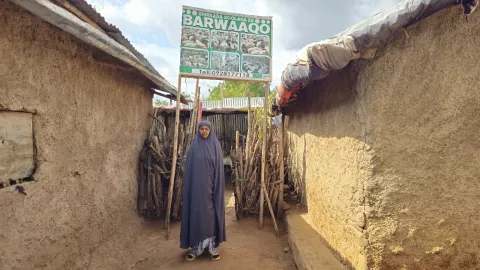
Success story of a female Somali refugee aiming to launch a livestock cooperative

In this video, see how Habiba Moghe Hussain, a Somali refugee, transformed her cattle business after winning Ethiopia's Business Plan Competition, and now aims to establish a women's livestock cooperative to empower her community.

Habiba Moghe Hussain, a Somali refugee and mother of three, transformed her cattle-trading business after winning a Business Plan Competition in Ethiopia. Supported by the Netherlands, the ILO and Hasi Consulting, the competition helped her refine her business strategy and awarded her a grant of US$900. With additional support from business development services (BDS), she was able to draft a formal business plan and start keeping proper financial records. Filled with renewed confidence, Habiba dreams of establishing a women’s cooperative focused on the sale of all types of livestock for others in her community.

Find out more about the PROSPECTS programme’s wider learning on gender & disability inclusion

Lebanon’s national disability allowance

Submitted by iloadmin on
Image
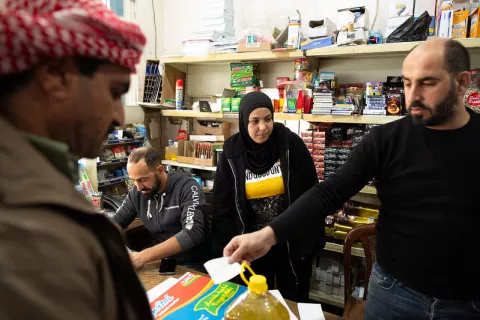
Image of a person in a shop handing a voucher to another person, with two other person in the background

The ILO and UNICEF, in collaboration with the Ministry of Social Affairs, supported the expansion of the National Disability Allowance to include refugees and people with disabilities.

PROSPECTS Lebanon contributed to an existing two-year, EU-funded social grants programme for people with disabilities, known as the National Disability Allowance (NDA). The ILO and UNICEF signed an agreement on collaborating with the Ministry of Social Affairs to provide people with disabilities (PWDs) with basic income support. This marked a shift from the “targeted social assistance” approach to a universal approach. The overall approach was inclusive across communities, not just for Lebanese PWDs, providing an entry point for the extension of the NDA to refugee PWDs.

PROSPECTS’ NDA funding was channeled into the NDA but came with the expectation that the caseload it covered would include refugees. This was significant, because the NDA was administered by the Ministry of Social Affairs and donor resources were used to support extending it to refugees. The NDA amounted to US$40/month for an initial 12-month period, along with referrals to additional services based on needs. The programme started in April 2023 and targeted people with disabilities residing in Lebanon and aged between 18 and 28 years.

PROSPECTS funding was also used to top-up NDA benefits for caseloads living in the South, at a time when conflict in Gaza started to spill across borders. While top-up NDA funding wasn't initially planned for, the outbreak of the crisis in South called for additional support and led the ILO to submit a request to the donor to repurpose funds from other planned activities. This was ultimately approved by the donor and supported by the ILO Regional Programme Unit. The NDA was able to continue to issue grants and effectively reach the target groups.

Find out more about this case study:

Find out more about the PROSPECTS programme’s wider learning on gender and disability inclusion.

Subscribe to